Know, Be, Do, Teach

The healthy Christian life is marked by growth along four stages of development.

Daniel explained the path in this way, "The people who know their God shall be strong, and carry out great exploits. And those of the people who understand shall instruct many" (Daniel 11:32-33).

  1. The people who know their God: The Christian experience begins with a knowledge of God and requires a change of mind. The word 'repent' means a change of mind and no one can come to God unless they repent.
  2. Shall be strong: A saving relationship with God results in new life. The born again one is empowered by the Spirit and becomes a new creation. 
  3. And carry out great exploits: Then (and only then) with their inside transformed, the young Christian is ready to 'do.' The growing Christian is ready to live out the gospel in faith and good works. 
  4. And the people who understand shall instruct many: Once a person has been radically changed by the gospel they are ready to share with others. This then becomes the apex of Christian maturity, when one is assisting others on their spiritual journey. 

Where do you see yourself on this path? What is the next stage in your development?


The Impossible Law

Two observations about when God gave Moses the law on top of Mount Sinai:

  1. The law was heavy. Two tablets of stone weighed a great deal. Still today, the law is heavy isn't it? It is difficult to fulfill all the responsibilities of the law.
  2. The law was broken.  As soon as Moses came down from the mountain he saw the golden calf and got angry. He threw down the stone tablets and they shattered. Likewise, in spite of our best attempts at legalism, we blow it pretty quickly don't we?

God never intended for us to get right with Him through the law. The law is to lead us to Christ (Rom. 10:4) . Since we can't keep the law, we need a Savior who can fulfill the law and make us righteous through faith in Him. 

Four Storms in Scripture

Recently, my friend Dr. Richard Hipps shared this outline with his congregation. He said he read it in an article, and since I like it I thought I'd pass it along. The four storms in scripture are as follows:

  1. Storms of Correction: a storm due to your own sin.
  2. Storms of Connection: a storm you experience because of other people's sin.
  3. Storms of Perfection: a storm intended to grow you.
  4. Storms of Reflection: a storm giving you the opportunity to glorify the Lord.

Are you in a tough time now? If so, what do you think the Lord is up to?

Spiritual Renewal Always Includes

During Josiah's reforms, "Hilkiah the priest found the Book of the Law" (2 Chronicles 34:14).

In the glory days of the rebuilding of the wall around Jerusalem, "Ezra opened the book" (Nehemiah 8:5).

At the start of our Lord's earthly ministry, "[Jesus] was handed the book of the prophet Isaiah. And He opened the book" (Luke 4:17).

Yes, my friend, if you are wanting a fresh touch from above, be sure and open God's book, the Holy Bible. 

Which Neighbor was Healed?

Early this week, my neighbor took a ride in an ambulance. My wife and I stood on the front porch and prayed for him as the firemen loaded him up and took him away. Thankfully he's home from the hospital and doing okay.

A few days later, in the other direction, but still on our street, the firemen came back for our other neighbor. Again, my wife and I prayed, this time over the phone, as the firemen tried to revive our neighbor. Thankfully, he was a Christian, so he's home in heaven now and doing okay.


Hearing with Faith

The apostle Paul explained that one lives the Christian life, the same way they start it (Col. 2:6). So let's review the process of conversion and discover the way of santification.

Ephesians 1:13 details three steps to justification.

  1. Hear the word of truth
  2. Believe the gospel
  3. Sealed with the Holy Spirit.

Abram was made right with God following these same steps.

  1. He heard God's promise.
  2. He believed God.
  3. God declared Abram righteous (Gen. 15:6).

When Paul wrote to the churches in Galatia he corrected their misunderstanding about Christian living. They erroneously thought the Christian life required obedience to the law. But Paul asks them, "Did you receive the Spirit by the works of the law or by the hearing with faith?" (Gal. 3:2). He takes them back to their initial experience with Christ and shows them that they entered into a saving relationship with Christ by hearing with faith, not by works of the law. Therefore, Paul argued, the way to make progress is to continue hearing with faith.

Miracles come by hearing the word with faith, not by trying to impress God with obedience to religious rules. The rhetorical question Paul asks is, "Therefore, He who supplies the Spirit to you and works miracles among you, does he do it by the works of the law, or by the hearing with faith?" (Gal. 3:5).

In both Ephesians and Galatians, Paul stressed the importance of hearing the gospel of truth with faith. Initially, faith in God's promises is how you are converted to Christ; and then, as a growing Christian, "hearing with faith" is how you experience the supernatural. 

Are you carefully and prayerfully reading, studying, and hearing God's word? Faith in God's word fuels spiritual vitality.

Operating Behind Enemy Lines

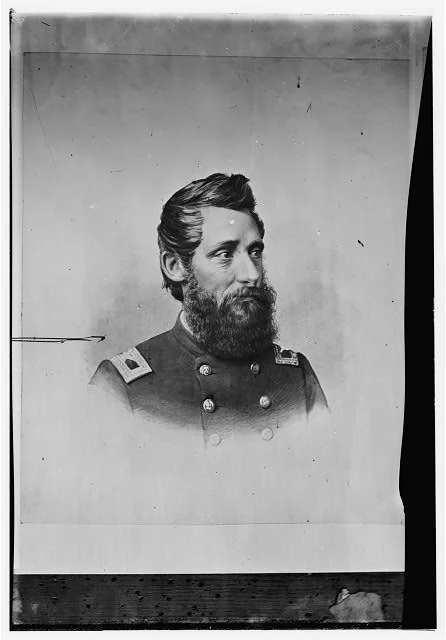
LaGrange is a small rural community in southwest Tennessee from which one of the most daring Civil War raids began. Colonel Benjamin Grierson a former music teacher who hated horses led his troops 600 miles through the heart of Mississippi all the way down to Union controlled Baton Rouge, Louisiana. His mission was to distract the Confederate army away from the Battle of Vicksburg and do as much damage as possible. With amazing courage, cunning, and military skill the 1700 Union soldiers led by Grierson accomplished their objectives and wrote themselves into military history.

As Christians we also operate behind enemy lines. This world we live in is enemy territory (1 John 5:19). We must be alert to potential dangers (1 Peter 5:8). This place is not our home. We are merely passing through. Eventually, this world will be destroyed (2 Peter 3:10). We are helping to bring in a new kingdom where peace and righteousness prevail. 


Dealing with Religious Liars

Today I need to go visit a church, but I'm sort of nervous. There is a person associated with this congregation who has said some hateful and dishonest things about me.

The Lord graciously showed me this morning how Jesus dealt with dishonest people. Following Jesus's example, I must do the following:

  1. I must be loving. This is how Jesus responded to the rich young ruler, who may have been a ruler of a synagogue or member of the Sanhedrin. This man falsely claimed to have kept all the commandments. Despite his bogus claim, Jesus looked on him with love (Mark 10:20-21).
  2. I will try to find some agreement. This is how Jesus dealt with two of His disciples who thought they could keep up with Jesus. He knew the sons of Zebedee could never endure the cross, but they would be martyred. James would be beheaded and John would be exiled to the Island of Patmos. Following our Lord's example I will seek agreement not argument (Mark 10:38-40).
  3. I have to guard my integrity. When the chief priests, scribes, and elders claimed ignorance about John's baptism, Jesus did not respond in kind. It would have been easy for Jesus to say, "Well I don't either." We must not stoop to their level. In spite of how others act, I want to do my best to behave with character and honor (Mark 11:33).
  4. I will never speak of their false accusations. This is what Jesus did when false witnesses accused Him before the high priest and the Sanhedrin. Mark 14:61 says, "[Jesus] kept silent and said nothing."

We are not surprised to see falsehoods in business or politics, but it is sad to see it in the church. Jesus dealt with dishonest religious people, we will too. But by God's grace, let us respond with love, harmony, and integrity. 

A Difficult Assignment

It is rising in my spirit like a quiet unwelcomed intruder, but I hear it. I know what I have to do. God is calling me to fast. What is fasting? Fasting is the voluntary abstinence from food for spiritual purposes. I have fasted before and it's not fun. The results are wonderful but the process is painful. Like you, I like to eat. I like to be full. I like to nourish my body. But sometimes you have to do what is unpleasant. I think I need to fast. Here's what Jesus said.

  1. Jesus said His followers will fast. In Mark 2:20 he explained that after He left planet earth His followers would fast. 
  2. Jesus said His followers must fast. When the disciples were unable to cast the demon out of the boy. They asked Jesus, "Why?" He explained that extra tough situations require prayer and fasting (Mark 9:29). 

Would you pray for me that I'd be obedient to this difficult assignment?

Maybe you are in a dire situation and perhaps you too should consider this spiritual discipline. 

Dying to Live

Three times in the book of Galatians the apostle Paul spoke of the believer's death. 

  1. We must die to religious rules (Gal. 2:19). Instead of trusting the law to make us right with God, we must trust Jesus for justification.

  2. We must die to personal pleasures (Gal. 5:24). Instead of obeying the desires of the flesh, we must keep in step with the leadership of the Holy Spirit.

  3. We must die to frivilous fashions (Gal. 6:14). Instead of loving the corrupt customs of world (1 John 2:15-17), we must love the Lord Jesus. 

When we die to the law, the flesh, and the world we come alive to God. And this is what the Lord Jesus promised when He said, "he who loses his life for My sake will find it" (Matt. 10:39).